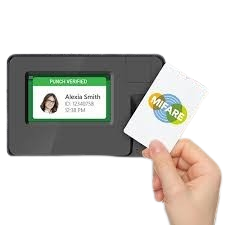
HID MIFARE DESFire EV3

HID MIFARE DESFire EV3

HID MIFARE DESFire EV3 is the latest addition to the MIFARE DESFire family of smart card chipsets from NXP. This advanced technology introduces additional features, and HID has fully leveraged these advantages. Here are some key points about DESFire EV3:

  • Feature-Rich Security:
  • DESFire EV3 cards implement the best features of the DESFire EV3 toolbox, including:
    • AES128 encryption: Ensures secure card data.
    • Secure channel-based file transfer: Protects against man-in-the-middle attacks.
    • Proximity checks: Enhances security.
  • Random UID: Unlike many other DESFire solutions, EV3 restricts the card from openly sharing any information associated with the user1.
  • Layered Security:
  • HID DESFire EV3 credentials offer layered security by incorporating a Secure Identity Object™ (SIO) data model.
  • SIO provides:
    • Key diversification: Enhanced security through diverse keys.
    • Authentication signatures and encryption: Additional protection.
  • Compatibility:
  • DESFire EV3 credentials are fully backwards compatible with EV1 and EV2 based solutions.
  • Available in three profiles:
    • High Security Profile: Best-in-class security and privacy, leveraging EV3 features and SIO application.
    • Compatibility Profile: Ensures flexibility with iCLASS® SE™, multiCLASS® Rev E readers, and third-party applications.

Summary: HID MIFARE DESFire EV3 offers robust security and compatibility, making it a critical component for modern physical access control programs.

Comments

Popular posts from this blog

RFID smart card reader

A Brief Overview RFID smart card readers are electronic devices that use radio frequency identification (RFID) technology to read and write data stored on RFID tags or cards. These devices have become increasingly popular due to their convenience, speed, and security benefits. How They Work Radio Waves: The reader emits radio waves that interact with the RFID tag or card. Data Transmission: When the tag or card is within range, it receives the radio waves and responds by transmitting the stored data back to the reader. Data Processing: The reader decodes the received data and processes it according to the specific application. Types of RFID Smart Card Readers Contactless: These readers don't require physical contact between the reader and the card. They are commonly used in access control systems, public transportation, and payment systems. Contact: These readers require the card to be inserted into a slot. They are often used in banking and identity verification app...

How to use a smart card?

Here's a breakdown of how to use a smart card, considering two main scenarios: 1. Using a Smart Card with a Reader: Locate the Reader: The smart card reader is a device you'll interact with to use your smart card. It can be a standalone unit connected to a computer or integrated into another device like an ATM or point-of-sale terminal. Identify the Interface: Most smart cards today are contactless, meaning you only need to hold or wave the card near the designated area on the reader for interaction. Some older cards might require physical insertion into a slot on the reader. Follow Instructions: The specific steps for using your smart card will depend on the application and the reader's interface. Often, on-screen instructions or visual cues on the reader will guide you. Here are some general possibilities: Login: For secure login to a computer or network, you might insert or tap your card and then enter a PIN (Personal Identification Number) displayed on th...

MIFARE Classic cards 1K and 4k

The MIFARE Classic 1K Card is a type of contactless smart card that uses radio frequency identification (RFID) technology to store and transmit data. Here's a breakdown of its key features and functionalities: Technology: Low-frequency (LF) RFID:  Operates at 13.56 MHz, enabling contactless communication between the card and an RFID reader.  Integrated circuit chip: Embedded within the card, this chip stores electronic data. In the case of MIFARE Classic 1K, the storage capacity is 1 Kilobyte (1,024 bytes). Read/write capability:  Data on the card can be read multiple times and potentially updated in some sectors (depending on configuration). MIFARE Classic Specifics: MIFARE Classic is a widely used type of MIFARE card, known for its affordability and compatibility. The 1k designation refers to the data storage capacity of 1 Kilobyte, which is suitable for storing basic information like a unique identifier, access control permissions, or a small amount of prepaid value...